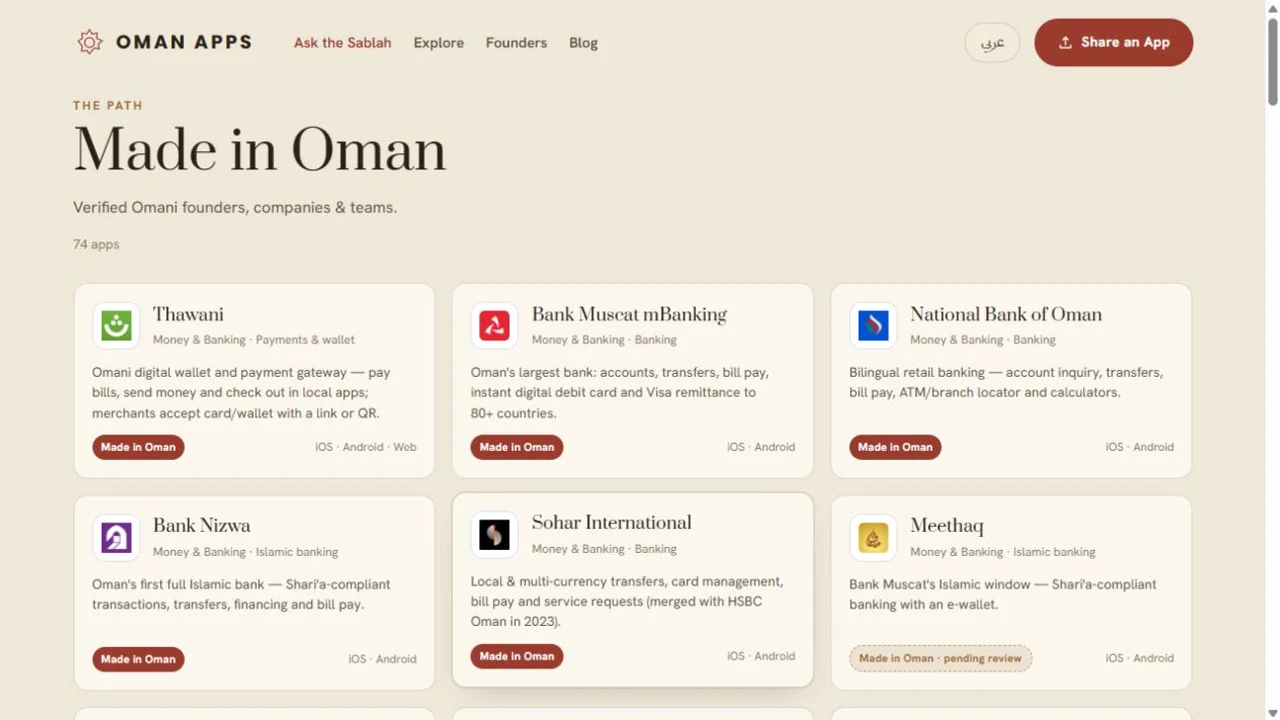
SEO begins with a site people and search engines can understand. A bilingual business needs complete Arabic and English pages, clear navigation, and useful answers. Technical settings support that work; they cannot compensate for unclear services or guarantee a position in search results.
Give each page a clear purpose
Assign a main customer question to each article or service page. A website-planning guide should help someone prepare a brief; a CRM guide should help them assess a workflow. Repeating the same sales paragraph under different titles does not create a useful library.
Write a descriptive title, one main heading, and a summary reflecting the actual content. Use natural customer language rather than repeating a city in every sentence. Explain genuine service coverage and delivery arrangements for Oman, the GCC, and international clients.
Connect equivalent translations
Give each language a separate URL and make the language switch preserve the article. Use hreflang annotations for corresponding translations, with a working canonical URL for each page. Translate the main content, not just the navigation.
Review Arabic headings, descriptions, links, and right-to-left presentation as carefully as English. Try a narrow screen and long titles. If an article is not translated yet, do not pretend that a link to the other-language homepage is its equivalent.
Make useful pages easy to discover
Link guides from the blog index and relevant services. Add contextual links where another article answers a natural next question. Descriptive link text tells readers what to expect. Keep breadcrumbs and a clear route back to the index so an article is not a dead end.
Provide a sitemap of published pages and check that robots.txt does not block them. Structured article data should match visible author details, dates, and content. It supports machine understanding, but does not guarantee special search results.
- Unique title, description, and main heading.
- Working canonical and matching language alternatives.
- Readable text and descriptive internal links.
- Compressed images with useful alternative text and dimensions.
- A sitemap covering published pages.
- Working contact links and real 404 responses.
Check the final domain and keep improving
Do not point canonical URLs at a domain that is still parked. When the custom domain is connected, update the canonical base, language links, sitemap, and structured data together. Redirect the old public host to equivalent paths after the new domain and HTTPS work.
Verify the final domain in Google Search Console and submit its sitemap. Review indexing and search queries, then improve pages where customers still lack an answer. Only change an updated date for a meaningful content edit. If AI helps with drafts, check every claim and link before publishing.
Common questions
Does structured data guarantee rich results?
No. Search engines decide eligibility and display. Markup should describe the actual visible page, without invented reviews or claims.
Should every article target every location?
Only include locations when they help answer the question. Explain service coverage on the site without repeating the same place names in every paragraph.